PortfolioCase study
PR-01Live · patent record
Pratyasa
A patent, on the record.
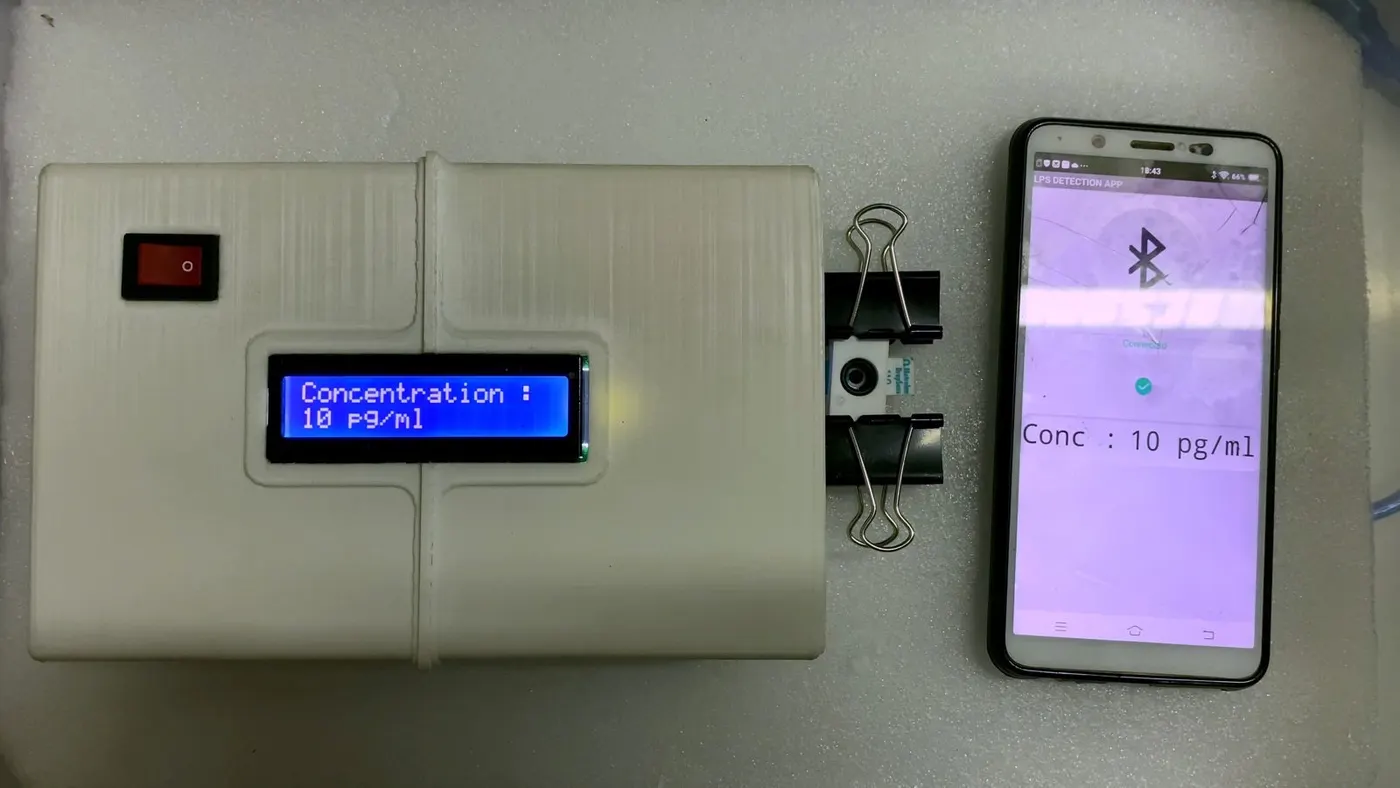
A fast, self-contained page for granted patent IN 429867 — a point-of-care sepsis-biomarker biosensor — so there is finally somewhere to point when someone asks what Tushar built.
IN 429867
granted patent
Structural
2nd of 5
co-inventors
Structural
patent owned by NIT–Calicut
Evidence keyStructural
The problem
The invention was real. Its record didn’t exist.
The patent is granted, the prototype exists and the science is published — but there was no page, no narrative, nowhere to point a recruiter or collaborator who asks “what did you actually build?”
The page
One fast page that tells the truth about the work.
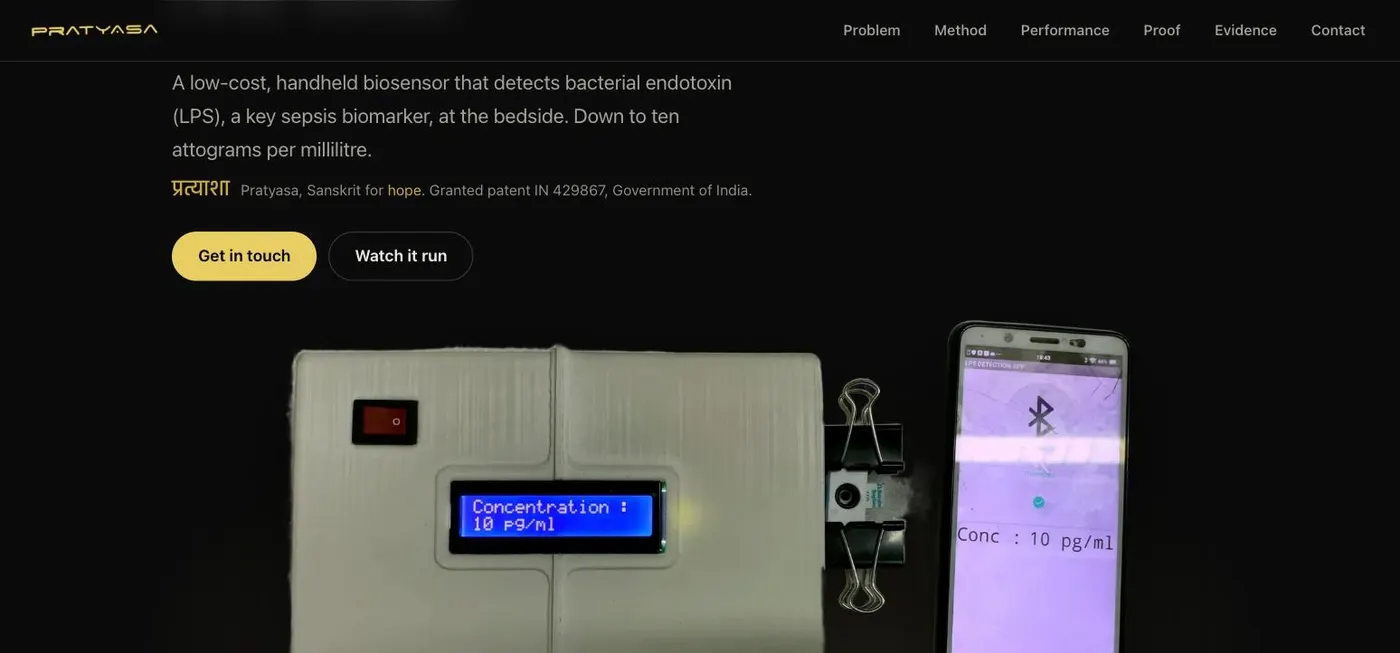
Tushar worked across the analyser’s electronics and firmware, the Android app, sensor preparation and validation testing in blood and food samples. The page shows that work with the certificate, the paper and device footage.
Decisions
Contributor, not owner. Prototype, not diagnostic.
- Could have
- A sales page for patent buyers
- Chose
- A general credibility page
- Because
- The second revision reframed the audience: recruiters, collaborators and colleagues, not buyers.
- Could have
- Present the patent as Tushar’s
- Chose
- Contributor framing, true to the paper
- Because
- It must stay true when a reader clicks through: the patent is owned by NIT–Calicut.
- Could have
- Let it read like a medical product
- Chose
- “Research prototype, not an approved diagnostic”
- Because
- A biosensor page must never imply regulatory approval.
How it stays true
Every fact is locked, then checked.
- Fact-locked PRDthe only source of claims
- Required-facts listin the checker
- Fact checkerruns over the page
- Static pageno third-party requests
- Live sitepratyasa.vercel.app
Evidence
Live, and linked from the scroll-film portfolio.
The device itself was validated in whole blood, mayonnaise and fruit juice, as reported in the published paper. Those are science results, not product metrics.
What isn’t measured
- No traffic or visit data is recorded for the page.
- The Soft Matter paper’s DOI is still missing from the record.
Sources
Everything here is backed by a real artifact.
- PRD
- Code